(The mitzvot of Sukkot speak to both the power and the fragility of human creativity and our ultimate dependence on God. October 2026)
I was recently fortunate to hear Rabbi Ephraim Kanarfogel speak about the two main mitzvot of Sukkot: The use of a sukkah and taking the four species. The sukkah is intentionally built as a jury-rigged ramshackle hut that no one would want as their permanent home. Among other things, it represents the fragility and insecurity of our attempts to control nature. The four species, in contrast, demonstrate that we do have some ability to turn nature toward our own purposes, for example, through agriculture. Indeed, Rambam implies as much in his explanation of this mitzvah. There are many homiletical explanations of this bundle of a date palm leaf, willow and myrtle branches, and an etrog (citron) as symbolizing the unity of four types of people, four parts and functions of the human body, and so forth. Rambam suggests a more fundamental plain meaning, that it reenacts the progress of the Jewish people’s recovery of their homeland under the leadership of Joshua: This process began in the desert, where date palms are found, especially at oases. Next, the Book of Joshua records our crossing of the Jordan River Valley, where water-loving willows flourish, and our arrival in the forested central highlands, including Jerusalem, where myrtle trees were common. Once the land was divided up among the tribes of Israel, each family was able to clear part of that forest to make room for farming, including the introduction of foreign species, such as the etrog. Thus, the four species represent our conversion of nature to civilization.
The Torah is clear that Sukkot commemorates the Exodus. It’s interesting to note, however, that the use of plant materials seems to tie these two mitzvot together and confirms our attempts to use natural products to create culture and civilization as another central theme of this holiday. The Talmud [1] states that whenever we perform a mitzvah that involves a plant part, we must hold it in the orientation in which it grew. The discussion there is focused on the etrog. Rashi’s commentary on this passage attempts to explain that this principle applies not only to the etrog, but to any mitzvah involving a plant part. Perhaps significantly, the only other example he is able to cite is building a sukkah with wooden walls: In that case, the boards must stand vertically and not be stacked horizontally. Apparently, trying to construct something organized from natural materials, be it a sukkah or a bundle of four species, is an important element of Sukkot.
This year, Sukkot brought the lessons of both the sukkah and the four species home forcefully. Here in the northeastern US, the holiday began with three days of rain, so most of us were not able to eat in the sukkah the first day of Sukkot, when it would have fulfilled a Torah commandment (during the remaining days of Sukkot, this is a rabbinic ordinance in memory of the Temple). After that, the weather was fine. This can be seen as a lesson in the contingency of our attempt to build and use a sukkah and the importance of faith, patience, and resilience. Lest this lead us into fatalism, the heroic foiling of the attempted hijacking of a flight to Israel during Sukkot also reminds us that with God’s help, we can accomplish great—perhaps miraculous—things when we stand up and do what is needed.
Rabbi Samson Raphael Hirsch (1808-1888), often called the father of Modern Orthodoxy, found additional meaning in the transitory, leaky sukkah from the Haftarah of Shabbat Chol HaMoed Sukkot (Ezekiel 38:18 – 39:16). In this passage, the prophet Ezekiel imagines a final battle in which the enemies of God and Israel are finally defeated, ushering in the Messianic age. The enemy nation, called Magog, is led by a king named Gog, a name that
Rav Hirsch connects with the Hebrew “gag,” meaning roof. In his commentary on Numbers 29:13, he treats this name as an epithet for an arrogant, self-aggrandizing despot who claims the power to secure himself not only with walls that defend against human foes, but with a metaphorical roof that protects him from the will of Heaven above. This is the opposite of the humility taught by the sukkah.
In addition to the balance of humility and confidence that Sukkot teaches us about our efforts to organize and control our environment, the four species also carry a lesson about the ways that we use natural resources.
Both Rambam [2] and Rashba (Rabbi Shlomo ben Avraham Aderet) [3] say that one may add extra myrtle wands (but not the other three species) to decorate the lulav without violating the Biblical prohibition of fabricating or erasing a Biblical mitzvah. The image of a lulav embedded in a bundle of sticks is remarkable and provocative for its resemblance to the fasces, an Etruscan and Roman symbol of judicial authority that was displayed in the presence of magistrates and other officials. It consisted of an axe (used on the magistrate’s orders to decapitate wrongdoers) enclosed in a bundle of birch wands (used when the magistrate ordered an offender to be beaten). The fasces is striking for its physical resemblance to the decorated lulav and its completely different meaning. The fasces’s birch wands are weapons, whereas the myrtle, one of the first species to recover from a middle-eastern forest fire, is a symbol of regeneration and hope. Different cultures’ uses and meanings for similar natural resources often reveal more than intended about their values. This frequently recurring pattern is developed further in the essay on karpas in Fruits of Freedom, the Torah Flora Hagadah.
After the fall of the Roman empire, the fasces lost its menacing aspect, but continued to appear in coats of arms and on coins as a symbol of governmental authority, including its use on the American Winged Liberty Head dime, minted from 1916 to 1945, in the insignia of many American and European government offices, and as the source of the name and several early symbols of European fascism. Societies ruled by brute force collapse in disorder. The healthy balance of initiative and humility taught by the sukkah and the four species helps to sustain Israel, the eternal people.

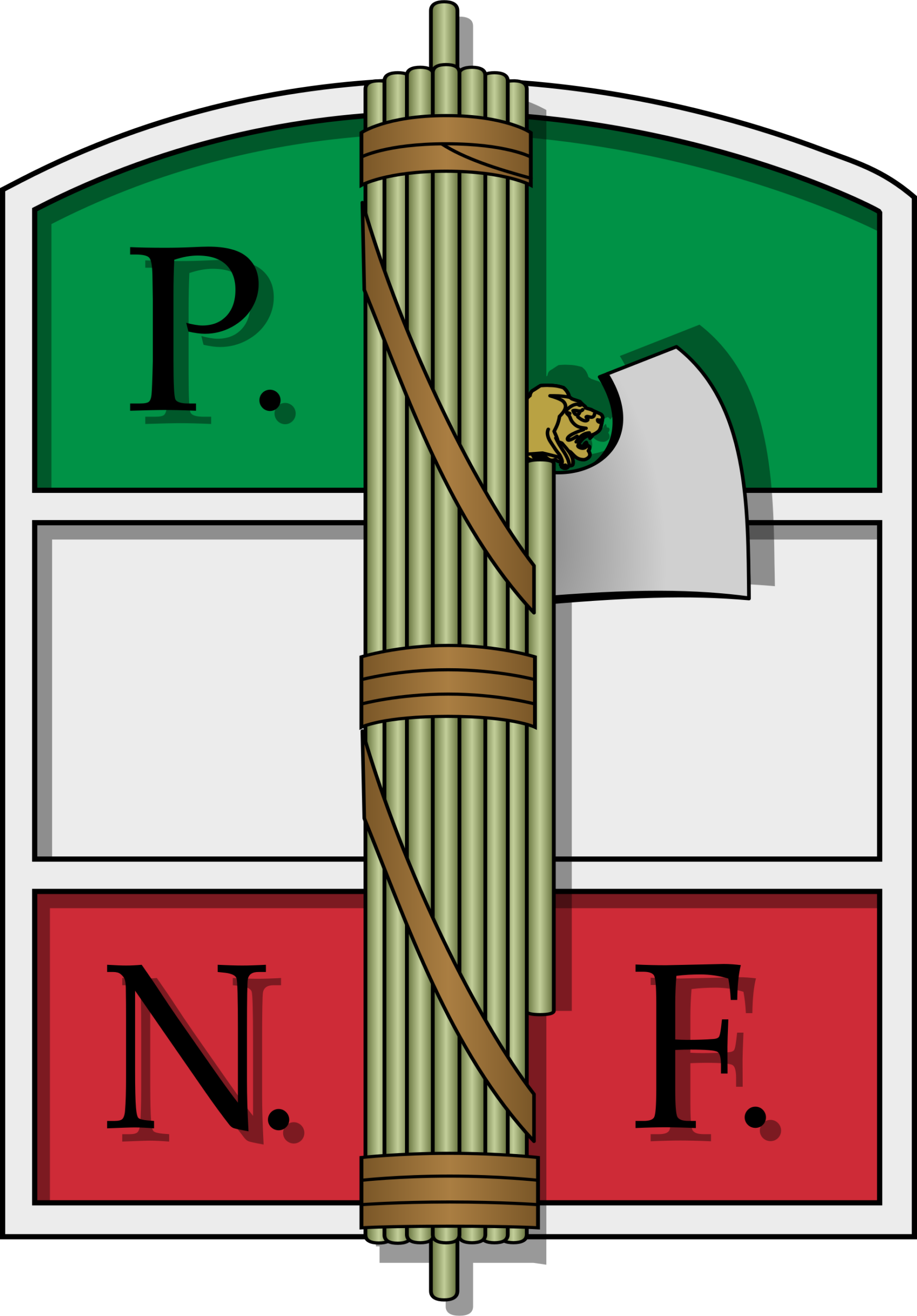
Image credits: Brandon Bigheart (Wnged Liberty dime) and NsMn (Italian fascist insignia)
Footnotes
[1] Sukkah 45b
[2] Mishneh Torah, Sefer Zmanim, Hilchot Lulav 7:7
[3] She’elot uTeshuvot Rashba, Vol. 1, Laws of Shofar, Sukkah, Lulav and Yom Kippur, note 75. Neither Rambam nor Rashba cite a source for this ruling, but it is interesting to note that the Mishnah (Bikkurim 3:10) permits the adornment of baskets of bikkurim (first fruits) brought to the Temple with additional fruits that are not bikkurim themselves, provided that they are also of the seven species from which the bikkurim are drawn.
Many thanks to Rabbi Chaim Strauchler for pointing out Rashba’s comment approving of extra myrtle wands as adornment for the arba minim.